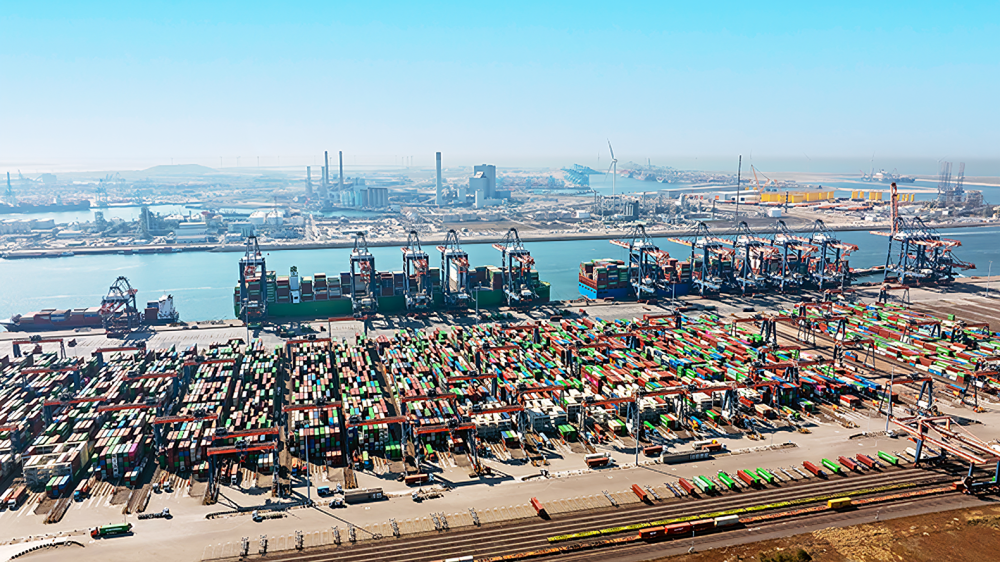
Europe’s ports are heading into what industry analysts are calling a “code red” summer, as soaring Asian imports and geopolitical disruptions converge to create the worst supply chain congestion since the COVID-19 pandemic.
Shipping and logistics companies are sounding the alarm over persistent backlogs, especially at Rotterdam, Antwerp, and Hamburg, three of North Europe’s largest gateway ports. Delays have grown critical, container ships are often waiting several days to berth, while inland barges queue for pickups amid low river levels and limited capacity.
At Antwerp, Europe’s second-busiest container port, vessels have been unloading between three and five days late. Some shipping lines report spending up to a week, instead of the usual two to three days, just to collect and distribute containers across regional terminals.
The situation, according to many experts in the industry, is the result of several overlapping disruptions, such as Donald Trump’s erratic tariff policies, a dry spring that left the Rhine unusually shallow, and a realignment of global shipping alliances, notably the breakup of the 2M alliance between Maersk and MSC.
With the U.S. market less accessible due to steep tariffs, Europe has absorbed much of the rerouted cargo. “We’ve seen Europe take in a lot of share that historically would have been meant for the US market,” noted DHL’s Ellerbaek. As a result, European terminals are now grappling with both higher-than-expected import volumes and unpredictable shipping patterns.
According to Hutchison Port Holdings Trust, China’s exports to the EU grew 13% year-on-year in Q2, and that double-digit growth is expected to continue. If projections hold, August and September could bring over 2 million TEUs into North European ports, far more than current infrastructure can efficiently handle.
Port authorities and terminal operators are attempting to contain the fallout. ECT in Rotterdam acknowledged the facility was quite busy, attributing the congestion to changes in shipping alliances, geopolitical instability, and soaring demand.
DP World, which manages terminals in both Rotterdam and Antwerp, said its teams were working diligently to mitigate disruption wherever possible. Still, some voices in the industry remain skeptical and warn that conditions could worsen through summer, calling it a “hot summer with code red for European container terminals” as schedule reliability is plummeting.
Carriers are employing creative strategies to ease the burden. The Gemini Cooperation (Maersk and Hapag-Lloyd) now calls directly at ports in Denmark and Sweden, skipping transshipments in overloaded hubs like Rotterdam. Mediterranean Shipping Co. is sailing direct from Ecuador to St. Petersburg, avoiding Benelux ports entirely.
Others are transferring containers to inland depots to free up yard space at deep-sea terminals. Yet, as analyst Destine Ozuygur from eeSea emphasized, many problems, such as river water levels and geopolitical uncertainty, remain outside of operators’ control. “The best they can do is maximize berth planning and use robust vessel forecasting tools,” she said.
With import demand still rising and key ports operating at full capacity, Europe’s logistics system is under immense strain. Though carriers are adjusting where they can, the underlying challenges of infrastructure, policy shocks, and environmental constraints leave little room for error. With peak congestion expected in August and September, the coming months will reveal whether these short-term fixes can hold, or if Europe’s supply chain resilience will be pushed to its limits once again.